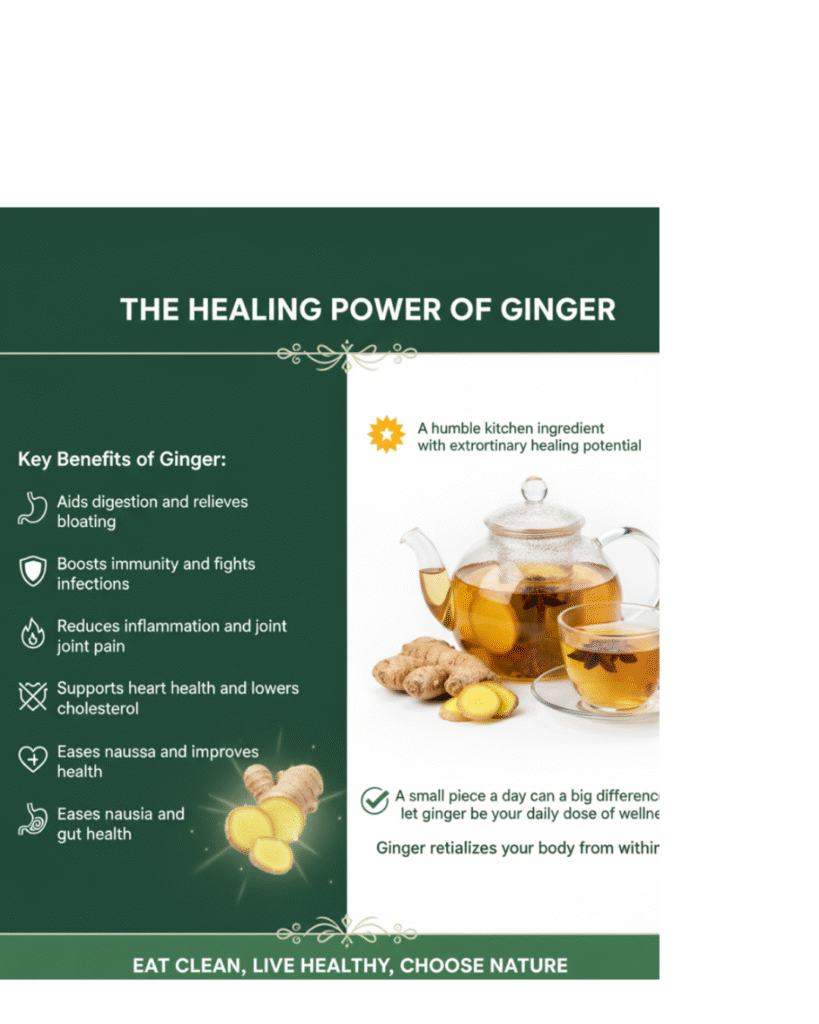
Among the innumerable botanicals esteemed in both culinary and medicinal traditions, ginger (Zingiber officinale) occupies an unparalleled echelon of reverence. Venerated since antiquity within Ayurvedic, Chinese, and Greco-Roman medical systems, this rhizomatous herb has transcended its identity as a mere condiment to assume the stature of a therapeutic cornerstone in holistic nutrition.
In the realm of contemporary dietetics, ginger is extolled for its remarkable biochemical versatility—a synergy of bioactive compounds that exert salutary effects upon digestion, metabolism, circulation, and immune modulation. Its inclusion in the quotidian diet is not a trivial indulgence but a measured act of preventive medicine rooted in both empirical science and timeless wisdom.
1. A Potent Facilitator of Gastrointestinal Function
Ginger’s most celebrated property lies in its profound carminative and digestive virtues. Its principal constituents—gingerols and shogaols—stimulate gastric motility and the secretion of digestive enzymes, thereby enhancing nutrient assimilation and relieving gastrointestinal distress.
The regular ingestion of ginger assists in mitigating dyspepsia, bloating, and abdominal discomfort, rendering it an invaluable adjunct for those seeking to maintain optimal digestive efficiency.
2. A Natural Anti-Inflammatory and Antioxidant Reservoir
The pharmacological potency of ginger emanates from its exceptional antioxidant and anti-inflammatory composition. Through the modulation of inflammatory mediators and neutralization of reactive oxygen species, ginger exerts a protective influence on cellular and systemic integrity.
Long-term consumption has been associated with a reduction in the incidence of rheumatoid disorders, cardiovascular inflammation, and metabolic derangements, positioning ginger as a subtle yet potent agent of physiological preservation.
3. Reinforcement of Immunological Resilience
Ginger’s immunostimulatory properties render it particularly efficacious in fortifying the body’s innate defenses. Possessing antimicrobial, antiviral, and mild antipyretic effects, it serves as a natural bulwark against seasonal pathogens and environmental stressors.
A warm infusion of ginger, particularly during transitional or winter months, invigorates the system, fosters circulatory warmth, and enhances resistance to infection.
4. Modulation of Glycaemic and Lipid Metabolism
Scientific inquiry increasingly substantiates ginger’s regulatory influence on metabolic homeostasis. Its bioactive compounds enhance insulin sensitivity, assist in glucose utilization, and ameliorate lipid imbalances.
Consequently, its judicious inclusion within dietary frameworks for individuals predisposed to type 2 diabetes mellitus, dyslipidaemia, or metabolic syndrome may yield significant adjunctive benefits when aligned with professional dietary supervision.
5. Alleviation of Nausea and Vestibular Disturbances
Historically, ginger has been esteemed for its antiemetic efficacy, offering natural relief from nausea, morning sickness, and motion-induced discomfort. Clinical research corroborates its capacity to regulate gastric rhythm and modulate neural pathways associated with nausea perception.
Thus, a modest dose of fresh ginger, consumed in extract or infusion form, can serve as a gentle yet effective therapeutic intervention.
6. Cardioprotective and Circulatory Enhancements
By promoting vasodilation, enhancing blood flow, and inhibiting platelet aggregation, ginger contributes meaningfully to cardiovascular integrity. Its consistent consumption aids in regulating serum lipids and sustaining vascular elasticity, thereby reducing the predisposition to atherosclerotic and thrombotic phenomena.
Such attributes substantiate its reputation as a natural cardioprotective agent, harmonizing traditional herbalism with contemporary cardiovascular research.
7. A Union of Gastronomic Refinement and Therapeutic Depth
Beyond its medicinal acclaim, ginger embodies culinary elegance. Its complex aroma and subtle pungency elevate both traditional and modern cuisines—infusing teas, soups, sauces, and confections with vitality and character.
This harmonious fusion of flavour and function epitomizes the essence of integrative nutrition: that wellness and pleasure need not exist in opposition.
Conclusion
To incorporate ginger into the daily dietary repertoire is to acknowledge the symbiosis between nourishment and healing. Its biochemical sophistication, spanning digestive fortification, anti-inflammatory potency, and immunological resilience, renders it an indispensable ally in the pursuit of holistic health.
Ginger’s legacy, enshrined across centuries and cultures, continues to affirm that true nutrition extends beyond sustenance—it is an art of equilibrium, awareness, and reverence for nature’s pharmacopeia.
In the ever-evolving discourse of modern dietetics, ginger endures as both an emblem of tradition and a testament to science, uniting the wisdom of the ancients with the precision of the present.