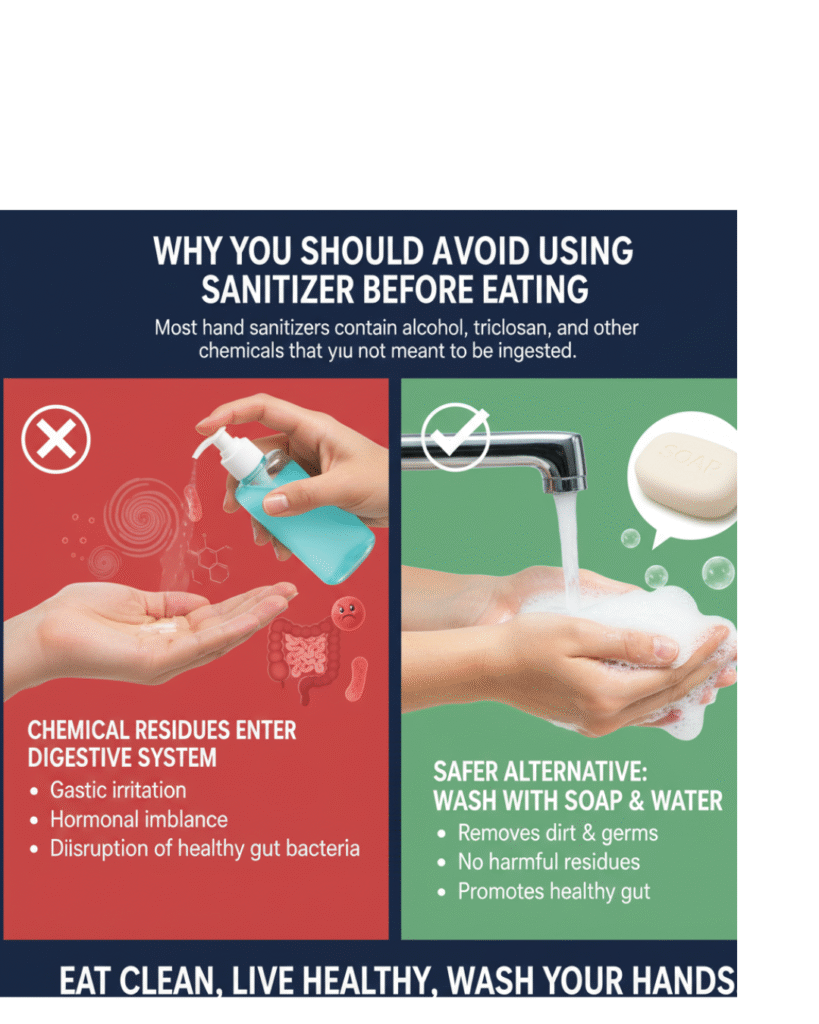
In an age governed by heightened sanitary vigilance, hand sanitizers have become emblematic of modern hygiene. These alcohol-based formulations, while instrumental in mitigating microbial exposure, are often misused in contexts where they may, paradoxically, compromise health rather than protect it. One such instance is their application immediately before eating—a practice that demands critical reconsideration from both a biochemical and nutritional standpoint.
The Chemical Paradox
Hand sanitizers predominantly consist of ethyl alcohol (ethanol) or isopropyl alcohol, typically in concentrations ranging between 60–95%. To enhance user experience, manufacturers frequently incorporate gelling agents, humectants, artificial fragrances, and emollients.
While these components effectively neutralize pathogenic organisms on the skin’s surface, they are neither food-grade nor biologically inert. Traces of these substances may persist on the hands post-application, subsequently contaminating food items and leading to unintended ingestion of chemical residues.
1. Alcoholic Residues and Gastrointestinal Disturbance
Alcohol-based sanitizers are designed for external antisepsis, not for proximity to the alimentary canal. When remnants of ethanol or isopropanol are ingested inadvertently, they may irritate the mucosal lining of the gastrointestinal tract, disrupt normal digestive enzymatic activity, and provoke nausea, acidity, or gastric irritation.
Repeated exposure, even in negligible quantities, can impair gut microbial homeostasis, thereby influencing metabolic efficiency and immune modulation.
2. Toxicity from Synthetic Additives
Many sanitizers contain additional compounds such as triclosan, benzalkonium chloride, and synthetic perfumes—agents associated with endocrine disruption, hepatic strain, and allergenic responses.
The ingestion of these chemicals, particularly among children or sensitive individuals, may precipitate hormonal imbalance, hypersensitivity reactions, and long-term toxic accumulation. The persistence of such compounds within biological systems also raises concerns regarding antimicrobial resistance and ecological contamination.
3. Erosion of the Skin’s Microbial Integrity
Human skin harbours a complex microbial ecosystem that serves as a natural defence mechanism. Excessive or misplaced use of sanitizers, especially before eating, eradicates beneficial skin flora, thereby weakening cutaneous immunity.
This microbial depletion not only renders the skin more vulnerable to irritation but also undermines its protective equilibrium, contradicting the very premise of hygiene.
4. Pediatric Vulnerability
Children, owing to their developing physiology and tactile curiosity, are particularly susceptible to sanitizer misuse. Residual chemicals left on their hands can easily transfer to food items, resulting in accidental ingestion of alcohol or other toxicants.
Even minimal exposure may induce drowsiness, vomiting, or metabolic disturbances, necessitating parental vigilance and the avoidance of sanitizers prior to meals.
5. Disruption of Sensory Purity
Beyond physiological risk, sanitizer use compromises the authentic sensory experience of eating. The residual odour and taste of alcohol or artificial fragrance distort the natural essence of food, diminishing gustatory satisfaction and interfering with the mindful engagement essential to healthy nourishment.
The Prudent Alternative: Soap and Water
The gold standard for hand hygiene before meals remains the simplest—washing hands with mild soap and clean running water. This method effectively removes pathogens and particulate matter without leaving chemical residues, ensuring both external cleanliness and internal safety.
Soap molecules emulsify grease and microbial particles, allowing their complete elimination upon rinsing—thereby maintaining hygiene without biochemical interference.
Conclusion
Although hand sanitizers occupy a legitimate place in public health—particularly in situations devoid of water access—their use before eating is physiologically ill-advised. The ingestion of even trace amounts of alcohol, synthetic additives, or chemical residues can disturb gastrointestinal harmony, impair microbial health, and diminish sensory satisfaction.
True hygiene transcends chemical sterilization. It lies in harmonizing safety with natural biological processes, preserving both the body’s defences and its nutritional integrity.
To eat healthfully is to respect the purity of the act itself—and that begins not merely with the food we consume, but with the clean, chemical-free hands that bring it to our lips.