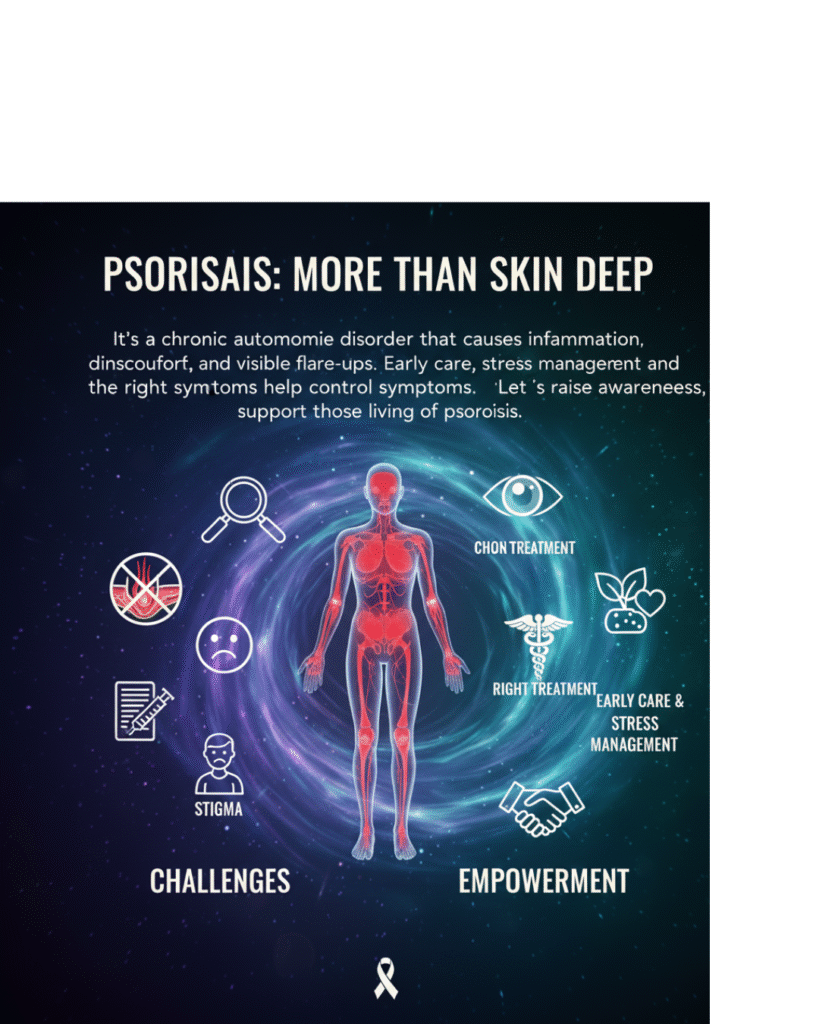
Psoriasis is a chronic, immune-mediated dermatological disorder characterized by aberrant keratinocyte proliferation, leading to the rapid turnover of epidermal cells. This accelerated cycle results in the development of thickened, erythematous plaques with adherent silvery scales, which may be pruritic, painful, or fissured. Affecting millions globally, psoriasis is not merely a cutaneous condition—it profoundly impacts physical health, emotional well-being, and social functioning.
Pathophysiology of Psoriasis
Psoriasis arises from dysregulated immune signaling that triggers excessive keratinocyte proliferation. In normal skin, the process of epidermal renewal takes approximately 28–30 days; in psoriatic skin, this cycle is condensed to just a few days. The consequence is the accumulation of immature skin cells forming inflamed, scaly plaques. Although non-contagious, the condition is multifactorial in origin, influenced by genetic susceptibility, immune dysregulation, and environmental triggers.
Clinical Manifestations
The presentation of psoriasis varies depending on its subtype and severity. Key clinical features include:
- Erythematous, Scaly Plaques
Elevated, inflamed lesions often covered with silvery-white scales, commonly affecting the elbows, knees, scalp, and lower back. - Pruritus and Dysesthesia
Itching, burning, or discomfort in affected areas; scratching may lead to bleeding or secondary infection. - Xerosis and Fissuring
Chronic plaques frequently exhibit dryness and cracking, sometimes accompanied by pain or minor hemorrhage. - Nail Involvement
Manifestations such as pitting, subungual hyperkeratosis, discoloration, and onycholysis (separation of the nail from the nail bed). - Articular Symptoms (Psoriatic Arthritis)
In certain individuals, joint inflammation develops, presenting as stiffness, swelling, and pain—potentially leading to long-term disability if untreated. - Additional Presentations
- Guttate lesions: small, red, drop-shaped papules.
- Functional impairment when lesions appear on the palms or soles.
- Psychosocial distress due to visible skin involvement.
Classification of Psoriasis
- Plaque Psoriasis (Psoriasis Vulgaris): The most common form, marked by thick, scaly plaques.
- Guttate Psoriasis: Small, drop-like lesions, frequently triggered by streptococcal infections.
- Inverse Psoriasis: Smooth, shiny patches in skin folds such as the armpits or groin.
- Pustular Psoriasis: Characterized by sterile pustules on an erythematous base.
- Erythrodermic Psoriasis: Widespread redness and scaling, often a medical emergency requiring prompt attention.
Indications for Medical Evaluation
Immediate medical consultation is warranted if any of the following occur:
- Rapid spread or worsening of lesions.
- Severe itching, pain, or discomfort.
- Evidence of secondary infection (pus formation, swelling, or redness).
- Joint stiffness or swelling suggestive of psoriatic arthritis.
Therapeutic Approaches
While psoriasis has no definitive cure, symptoms and disease progression can be effectively managed through a combination of treatments:
- Topical Pharmacotherapy
Application of corticosteroids, emollients, and vitamin D analogs to reduce inflammation and regulate skin cell turnover. - Phototherapy
Controlled ultraviolet (UV) light exposure to suppress excessive epidermal proliferation. - Systemic Agents
Use of oral or biologic immunomodulators to target specific inflammatory pathways in moderate to severe cases. - Lifestyle and Adjunctive Measures
- Stress management through mindfulness, yoga, or cognitive-behavioral techniques.
- Maintaining a balanced, anti-inflammatory diet.
- Avoiding known triggers such as smoking, alcohol, and certain medications.
Conclusion
Psoriasis is a lifelong, immune-mediated dermatologic disorder with significant physical, systemic, and psychosocial implications. Early recognition of characteristic signs—erythematous plaques, itching, nail changes, and joint involvement—facilitates timely intervention. Through a tailored approach combining pharmacologic therapy, phototherapy, and lifestyle modification, patients can achieve symptom control, enhanced quality of life, and reduced disease progression